PBS for Attention Deficit Hyperactivity Disorder (ADHD) Online Course
Positive Behaviour Support (PBS) Strategies for Children and Adolescents with Attention Deficit Hyperactivity Disorder (ADHD) is a comprehensive ADHD online course for parents, educators and mental health professionals. It provides a toolkit of evidence-based and practical strategies to manage ADHD and promote focus, regulation and participation at home, in the classroom, and in the community.
Through this self-paced, CPD-certified training, you’ll gain a deeper understanding of ADHD, learn how to assess and manage symptoms, and develop proactive plans that support learning, wellbeing and relationships.
What is Attention Deficit Hyperactivity Disorder (ADHD)?
Attention Deficit Hyperactivity Disorder (ADHD) is a neurodevelopmental condition characterised by persistent patterns of inattention, hyperactivity, and impulsivity that interfere with daily functioning. ADHD affects both children and adults, though the symptoms and challenges may present differently across later life stages.
According to the Diagnostic and Statistical Manual of Mental Disorders, 5th Edition (DSM-5), ADHD is classified into three main types: predominantly inattentive, predominantly hyperactive-impulsive, and combined presentation.
How is ADHD Diagnosed?
An ADHD diagnosis describes whether someone has ADHD or not and is based on a detailed assessment of behavioural, cognitive and emotional patterns. This may include standardised assessments, observations, interviews with caregivers and teachers, and review of developmental history. Only qualified healthcare professionals or mental health specialists can make a diagnosis in accordance with NICE guidelines and recognised best practice frameworks.
Early and accurate diagnosis and treatment can significantly improve outcomes, helping the child or adult to develop stronger learning, social and self-regulation skills.
What Causes ADHD?
The causes of ADHD are complex and involve multiple risk factors, including:
-
Genetic factors: ADHD often runs in families and can be linked to hereditary traits. ADHD can occur in young people or adults (adult ADHD).
-
Brain changes: Neuroimaging studies have shown differences in areas of the brain that control attention, impulse regulation, and executive functioning.
-
Environmental influences: Exposure to toxins, stress, or certain prenatal conditions may contribute to the development of ADHD.
-
Psychosocial factors: Family stress, mental health, inconsistent routines, and poor sleep can increase challenges in children with ADHD.
The latest adhd research describes these factors interacting and aims to lead to better understanding of ADHD and more effective treatments.
What are the Symptoms of ADHD?
ADHD symptoms typically fall into two categories: inattentive and hyperactive/impulsive. A child or adult with ADHD may:
Inattentive behaviours
-
Have difficulty sustaining attention or completing tasks.
-
Make careless mistakes in schoolwork or work activities.
-
Appear not to listen when spoken to directly.
-
Struggle to follow instructions or stay organised.
Hyperactive and impulsive behaviours
-
Fidget or move excessively when seated.
-
Find it hard to wait their turn or control impulses.
-
Interrupt conversations or activities.
-
Experience restlessness or difficulty engaging in quiet activities.
These behaviours can vary in frequency, intensity and duration, and may be influenced by the environment and other mental health problems such as anxiety or learning difficulties.
How is ADHD Treated and Managed?
ADHD can be successfully managed with a combination of behavioural strategies, environmental adjustments, and in some cases, medication. The Positive Behaviour Support (PBS) approach emphasises understanding the purpose of the behaviour, creating supportive environments, and teaching replacement skills.
Effective ADHD treatments may include:
-
Behavioural interventions: structured routines, clear expectations, and positive reinforcement.
-
Educational support: classroom accommodations, visual aids, and consistent communication between teachers and parents.
-
Therapies: cognitive-behavioural strategies to improve emotional regulation and problem-solving.
-
Medication: prescribed and monitored by qualified health professionals where appropriate.
The goal is to enhance attention, motivation, and emotional wellbeing, enabling the person with ADHD to thrive across all areas of life.
ADHD Parenting Course
An ADHD Parenting Course Built on Positive Behaviour Support
Parenting a child with ADHD can feel like the same battles play out every day: getting out the door in the morning, homework, screen time, bedtime and big emotions when things don't go to plan. Many ADHD courses for parents explain what ADHD is. This ADHD parenting course goes further and shows you what to do about it at home.
Using the Positive Behaviour Support (PBS) framework, you will learn to look beneath the behaviour and work out what your child is trying to communicate or avoid. From there, you can make practical changes that prevent problems before they start and respond calmly when they do.
In this ADHD course for parents, you will learn how to:
- Understand how attention, impulse control and emotional regulation difficulties show up in everyday family life,
- Identify the triggers behind challenging moments, such as transitions, waiting, unstructured time and tiredness,
- Set up routines, visual supports and home environments that make it easier for your child to succeed,
- Teach the skills your child needs, rather than only reacting to behaviour,
- Recognise the early signs of escalation and use de-escalation strategies to stay calm and keep everyone safe,
- Work with your child's school and therapists so everyone is using a consistent approach,
The course is self-paced, so you can fit it around family life and come back to the strategies whenever you need them over your 12 months of access.
ADHD Professional Development for Teachers
Teachers and education staff play an important role in supporting children and adolescents with ADHD. Difficulties with attention, organisation, impulse regulation and emotional regulation can all affect a student's participation, behaviour, relationships and learning within the classroom.
This ADHD professional development for teachers provides a structured introduction to ADHD through the Positive Behaviour Support (PBS) framework. It is designed to help educators better understand why behaviours occur and develop practical, proactive strategies that can be applied within school and classroom settings.
Through the course, teachers will develop a deeper understanding of ADHD, including its core characteristics, neurological foundations and the ways it can affect learning, social relationships and emotional development.
The ADHD training for teachers then moves from understanding ADHD to applying that knowledge in practice. You will learn how to:
-
Identify possible triggers, maintaining factors and skill deficits associated with challenging or inattentive behaviour.
-
Use the Assess–Manage–Prevent cycle to better understand behaviour and plan appropriate support.
-
Conduct or contribute to a Functional Behaviour Assessment (FBA).
-
Develop Behaviour Prevention and Management Plans.
-
Create supportive environments, interactions and activities.
-
Teach and reinforce skills including sustaining attention, following routines, managing impulses and developing coping strategies.
-
Work collaboratively with caregivers and allied professionals to support consistent approaches and monitor progress.
The emphasis throughout the training is on practical strategies that can support attention, regulation, positive behaviour and participation rather than simply providing information about ADHD.
The course is self-paced, provides 5 hours of professional development, and includes a certificate of completion. Participants have 12 months to complete the course, making it possible for teachers and other education staff to work through the training around their existing commitments.
For educators working with students with ADHD in mainstream or special education settings, the course provides a practical framework and resources that can continue to inform classroom support after the training has been completed.
How This ADHD Course Differs From Free ADHD Training
There is a wealth of free information about ADHD available online, including articles, videos, podcasts and introductory training. These resources can be useful for developing a general understanding of ADHD, but they do not always provide the structured learning, practical resources or professional development recognition required by educators and professionals.
The Behaviour Help ADHD online course provides a more comprehensive and structured approach to learning. Rather than simply explaining what ADHD is, the course guides you through the Positive Behaviour Support framework and shows you how to apply practical strategies to assess, prevent and respond to behaviours and support needs.
By enrolling in the course you receive:
-
5 hours of professional development through structured, self-paced learning and course activities.
-
Accredited professional learning, with Behaviour Help recognised as a NESA and TQI accredited provider.
-
A certificate of completion to provide evidence of your professional development.
-
Practical ADHD and Positive Behaviour Support resources that can be used beyond the course itself.
-
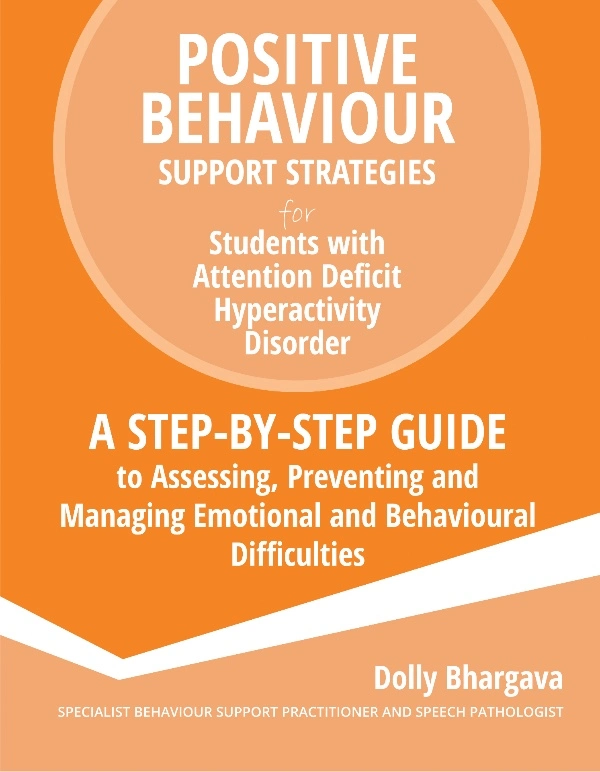
A complimentary course book, Positive Behaviour Support Strategies for Students with Attention Deficit Hyperactivity Disorder, providing a lasting reference guide.
-
12 months' course access, allowing you to revisit modules, strategies and resources whenever you need them.
The aim is not simply to provide information about ADHD, but to help you translate that knowledge into practical support. You will work through a structured process for understanding behaviour, completing a Functional Behaviour Assessment, developing preventative strategies and planning appropriate responses.
For parents, educators, support staff and allied health professionals looking for more than a brief introduction to ADHD, the course provides a practical framework that can continue to be used in everyday settings long after the training has been completed.
About your course presenter
This course was developed by Dolly Bhargava, an NDIS Registered Specialist Behaviour Support Practitioner and Speech Pathologist with over 26 years of practical experience.
Dolly holds a Bachelor of Applied Science in Speech Pathology from the University of Sydney, a Master of Special Education from the University of Newcastle and a Certificate IV in Training and Assessment. She has worked with children, adolescents and adults with emotional and behavioural difficulties in schools, childcare centres, disability services and corrective services.
Dolly is also the author of the course book, Positive Behaviour Support Strategies for Students with Attention Deficit Hyperactivity Disorder. The strategies in this course come from her day-to-day work with families, educators and support teams, and they are designed for use in real homes and classrooms.
Who is this ADHD Course For?
This ADHD training is suitable for:
- pa
-
Parents and families supporting children with ADHD.
-
Educators and teaching staff working in mainstream or special education settings.
-
Mental health and healthcare professionals working in practice and seeking continuing professional development (CPD) in ADHD and Positive Behaviour Support.
The course can be completed at your own pace, allowing flexible access to expert-led content and resources based on the latest scientific evidence base, expertise and ADHD research.
Course Benefits
At the end of this ADHD online course, you will have:
-
A toolkit of strategies to assess, manage, and prevent challenging behaviours seen in people with ADHD.
-
Practical tools to develop and apply a personalised behaviour support plan.
-
A certificate of completion for 5 hours of professional development.
-
A free course book: Positive Behaviour Support for Students with ADHD.
ADHD Course Frequently Asked Questions
What is the Behaviour Help ADHD online course?
The Behaviour Help ADHD online course provides practical Positive Behaviour Support (PBS) training for parents, teachers, educators and professionals supporting children and adolescents with Attention Deficit Hyperactivity Disorder (ADHD). The course focuses on understanding ADHD, identifying factors contributing to behaviours of concern, developing preventative strategies, teaching skills and responding safely when behaviour escalates.
Where can I find an online ADHD course for teachers in Australia?
Behaviour Help offers a self-paced ADHD online course for Australian teachers, education support staff and other professionals. It provides 5 hours of professional development and a certificate of completion. The course covers practical strategies for supporting students with ADHD in classrooms and other educational settings.
Is the ADHD course suitable for parents?
Yes. The Behaviour Help ADHD course is suitable for parents and carers who want practical strategies for supporting children and adolescents with ADHD at home. It addresses everyday challenges involving routines, transitions, attention, emotional regulation, communication and behaviours of concern.
Who developed the Behaviour Help ADHD course?
The course was developed by Dolly Bhargava, an NDIS Registered Specialist Behaviour Support Practitioner and Speech Pathologist with over 25 years of practical experience. Dolly holds a Bachelor of Applied Science in Speech Pathology, a Master of Special Education and a Certificate IV in Training and Assessment.
Is the ADHD course accredited by NESA or TQI?
Behaviour Help is a NESA-accredited professional development provider, and the Behaviour Help ADHD online course is individually accredited by the Teacher Quality Institute (TQI). The course provides 5 hours of professional development and a certificate of completion. NESA provider accreditation does not mean that NESA separately accredits or endorses each course. Teachers should record this learning in accordance with their state or territory teacher registration requirements.
How long does the ADHD course take?
The ADHD course provides approximately 5 hours of professional development, including video modules and course book activities. It is self-paced, and participants have 12 months of access from the date of purchase.
Is a book included with the ADHD course?
Yes. Participants receive a free Kindle copy of Dolly Bhargava’s book, Positive Behaviour Support Strategies for Students with Attention Deficit Hyperactivity Disorder, to support the practical application of strategies after completing the course.
Do I need previous knowledge of ADHD or Positive Behaviour Support?
No. The course introduces ADHD and Positive Behaviour Support concepts before progressing to practical strategies. It is suitable for beginners and professionals who want to develop their existing knowledge.
Is the ADHD course suitable for primary and secondary school students?
Yes. The course focuses on supporting children and adolescents, including primary and secondary school-aged students. Strategies should be adapted to the individual student’s age, communication preferences, developmental stage and support needs.
Does the ADHD course cover autism, anxiety or demand avoidance?
The course focuses on ADHD while recognising that children and adolescents may have additional support needs, including autism, anxiety or demand-avoidant presentations. Behaviour Help also offers separate online courses on autism, anxiety and Pathological Demand Avoidance (PDA).
Can schools or organisations enrol multiple staff members?
Yes. Schools, disability service providers and other organisations can enquire about enrolling groups of staff. Contact dolly@behaviourhelp.com with the organisation’s name, course required and approximate number of participants.
Can NDIS funding be used to purchase the ADHD course?
NDIS funding may be available where the training relates to the participant’s disability support needs and meets applicable NDIS funding rules. Eligibility and payment arrangements depend on the participant’s individual circumstances and plan. Please confirm eligibility before purchasing. For invoicing enquiries, contact dolly@behaviourhelp.com.
Can people outside Australia complete the ADHD course?
Yes. The Positive Behaviour Support principles and practical strategies may be relevant to parents, teachers and professionals internationally. However, NESA, TQI and NDIS information relates specifically to Australia.